World Cup 2018: Late goals, VAR and set-pieces dominate group stage
After two weeks of non-stop action, the World Cup group stages have come to a close, with half the teams packing their bags for home and the other 16 readying themselves for the knockout phase.
The initial round of 48 matches has seen no shortage of goals, drama and talking points, with the VAR system contributing in its own way to all three of those.
While the biggest story was undoubtedly defending champions Germany’s humiliating exit, finishing bottom of Group F behind Sweden, Mexico and South Korea, FIFA’s introduction of technology to aid referees has taken up more column inches than anything else over the past fortnight.
With the help of Opta, we analyse the data going back 52 years, to England’s triumph on home soil, to see how the numbers compare.
So…#URUPOR #ESPRUS #FRAARG #CRODEN #BRAMEX #SWESUI #BELJPN #COLENG
Excited? #WorldCup pic.twitter.com/Kll9X54wbO
— FIFA World Cup (@FIFAWorldCup) 28 June 2018
A VAR GREATER NUMBER OF PENALTIES
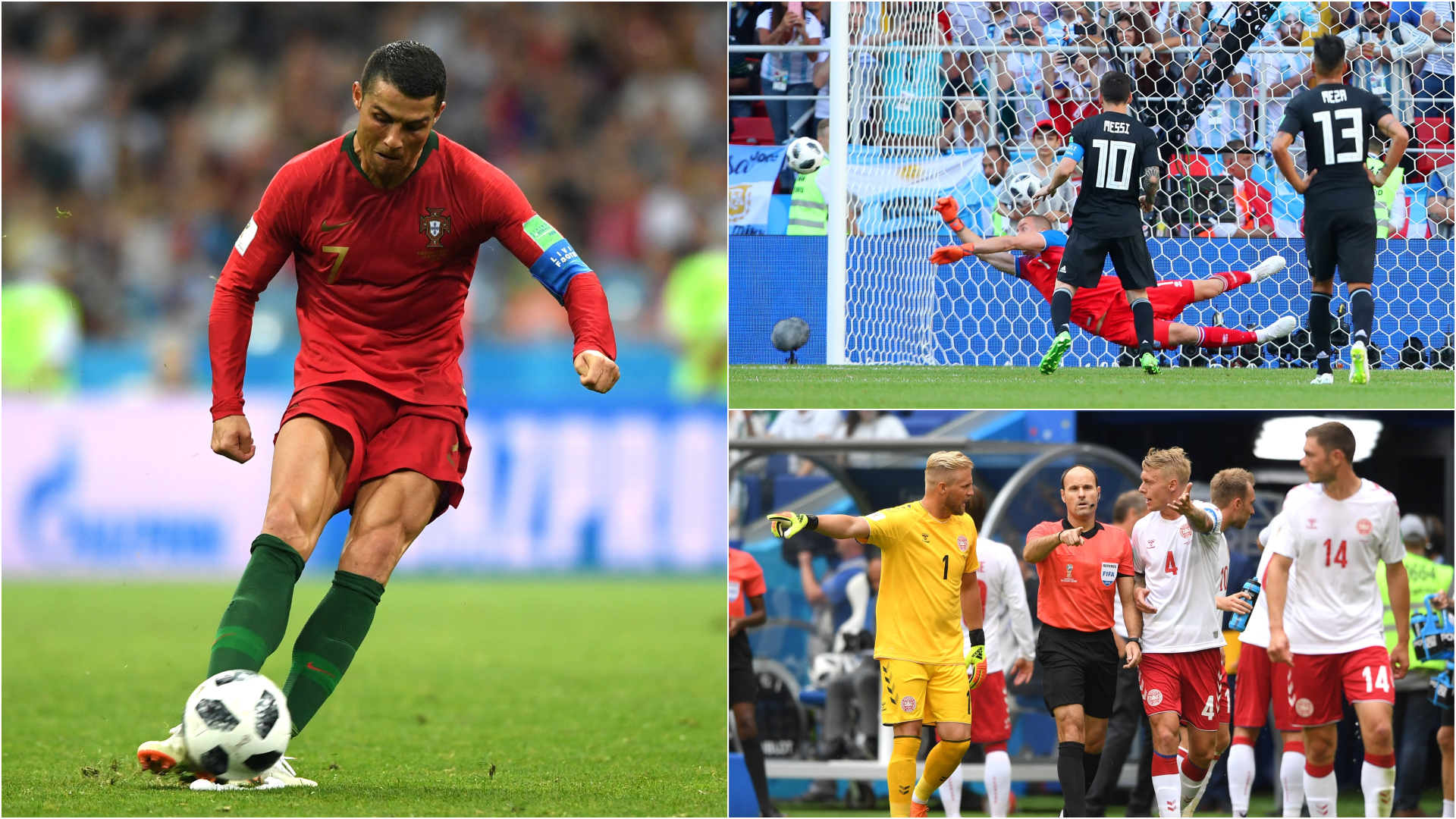
The combination of over-zealous defending (we’re looking at you, Panama) and the implementation of the VAR system means the group stages saw a record 24 spot-kicks awarded. That tally is higher than any other tournament in its entirety, and more than the previous two World Cup group phases combined (20). And the use of the technology has had other significant consequences; on average, there have been more than seven minutes of injury time in each game, over 90 seconds more than the previous record. That, in turn, has led to a rapid increase in late goals. In all, 20 were scored after the 90th minute – twice as many as the previous benchmark set at France 98.
What a start to the second half! #POR are awarded a penalty following a VAR referral, but @Cristiano‘s effort is SAVED by Beiranvand! #IRNPOR 0-1#ESPMAR 1-1 pic.twitter.com/5HYuNrUSjk
— FIFA World Cup (@FIFAWorldCup) June 25, 2018
SET-PIECE SPECIALISTS
Those 24 spot-kicks have contributed to an unusually high proportion of set-piece goals – 43 per cent of those scored at the tournament so far have come from dead-ball situations. That figure rises above the previous high of 38 per cent from the finals in France 20 years ago, while the average number for the modern game is one in three. Gareth Southgate’s England side are a testament to the importance of set-pieces – of their eight goals in Group G, only two came from open play, with the remainder coming off the back of corners, penalties and free-kicks.
That feeling. #threelions pic.twitter.com/VXHLejOrqF
— England (@England) June 24, 2018
GOALS, GOALS, GOALS
Out of the 48 group matches, only one finished goalless – France’s dour draw with Denmark that helped see both sides safely through from Group C. That figure is a first-round record, despite the fact there was an all-time low in terms of shots per game at 24.4. It seems sides are becoming increasingly proficient at getting in behind opposition defences, however, as a record 58 per cent of those efforts came from inside the box, a significant rise on the previous best set four years ago, which stood at 52 per cent. Some calamitous defending has contributed to the number of penalties awarded, but it has also seen a glut of own goals; the nine at these finals are as many as the past three editions combined.
50 – Yassine Meriah’s own goal is the 50th in the World Cup history. Blow. pic.twitter.com/HnuMHLqPfd
— OptaJean (@OptaJean) 28 June 2018
KEEP IT CLEAN, BOYS
Although punishing many a physical defender in the penalty area, the VAR system has not prompted an upturn in the trend of red cards. Cristiano Ronaldo was perhaps fortunate to only see yellow for an off-the-ball incident against Iran, but in the 48 group matches there have only been three red cards awarded, comparing favourably to the nine at Brazil 2014 and, since the format was expanded to include 32 teams, a high of 18 in 2006. As well as their cards, referees have been happy to keep their whistles in their pockets, with only 27 fouls a game – a record low. Try telling that, though, to Senegal, who were eliminated from the competition due to their inferior disciplinary record as Japan squeezed through from Group H.
28 – Japan conceded fewer fouls (28) at the 2018 #WorldCup than any other country with 3 games played. Fair. pic.twitter.com/DwOmSwc3J2
— OptaJohan (@OptaJohan) 28 June 2018